
Enterprise Grade

AI Agents Built
for Real Operations

Custom agent systems that improve speed, quality, and control across enterprise workflows.

BUILT FOR ENTERPRISE OPERATIONS

Faster execution. Tighter control

What We Build

Custom AI agents for enterprise operations

Workflow Execution Agents

Execute multi-step workflows across tools, approvals, records, and business rules.

Workflow Execution Agents

Execute multi-step workflows across tools, approvals, records, and business rules.

Exception Handling Agents

Identify edge cases, escalate decisions, and prevent stalled work.

Exception Handling Agents

Identify edge cases, escalate decisions, and prevent stalled work.

Knowledge Retrieval Agents

Pull trusted answers from approved docs, tickets, databases, and internal systems.

Knowledge Retrieval Agents

Pull trusted answers from approved docs, tickets, databases, and internal systems.

Quality Control Agents

Review outputs, flag defects, and reduce rework before delivery.

Quality Control Agents

Review outputs, flag defects, and reduce rework before delivery.

Custom Agent Systems

Built around your workflows, permissions, data, and operational targets.

Custom Agent Systems

Built around your workflows, permissions, data, and operational targets.

Why AI Agents

The Cost Of Manual Operations

Without Agents

Without Agents

Revenue waits on follow-up

Support costs keep rising

Teams repeat low-value work

Quality depends on individuals

Growth requires more headcount

With Custom Agents

With Custom Agents

Leads move while intent is high

Repeat requests resolve faster

Teams spend time on exceptions

Every workflow follows standards
Output grows without linear hiring

You scale operations without scaling headcount

What We Mean by “AI Agent”

Not Chatbots. Execution Systems.

Custom agents read context, apply rules, and complete workflow steps inside your business.

They escalate exceptions instead of guessing.

Deployment Areas

Agent Systems.
Where Work Stalls.

Built across:

Revenue Ops

Support Ops

Finance Ops

Compliance

Internal Ops
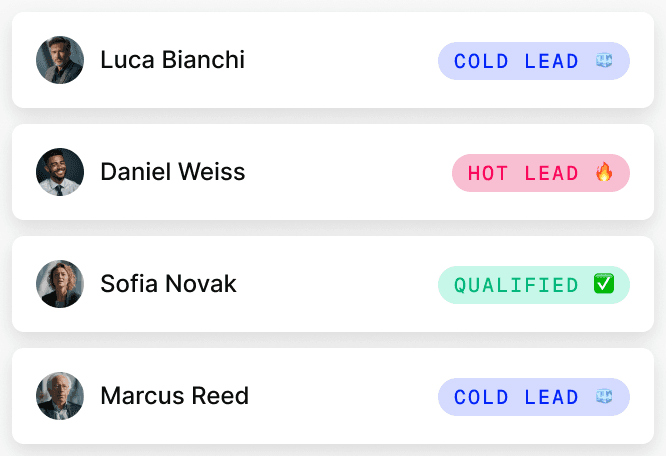
Revenue Execution

Agents qualify demand, update records, route handoffs, and trigger next steps.
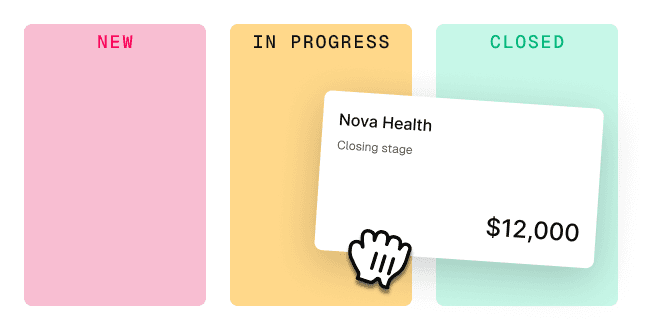
Operational Control

Agents move approvals, check records, surface exceptions, and maintain process flow.
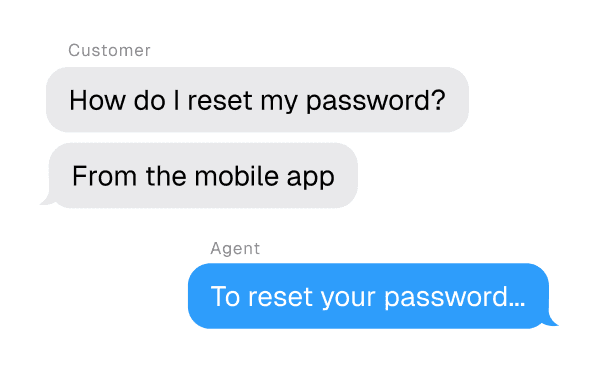
Support Resolution

Agents triage requests, answer from source material, and escalate high-risk cases.
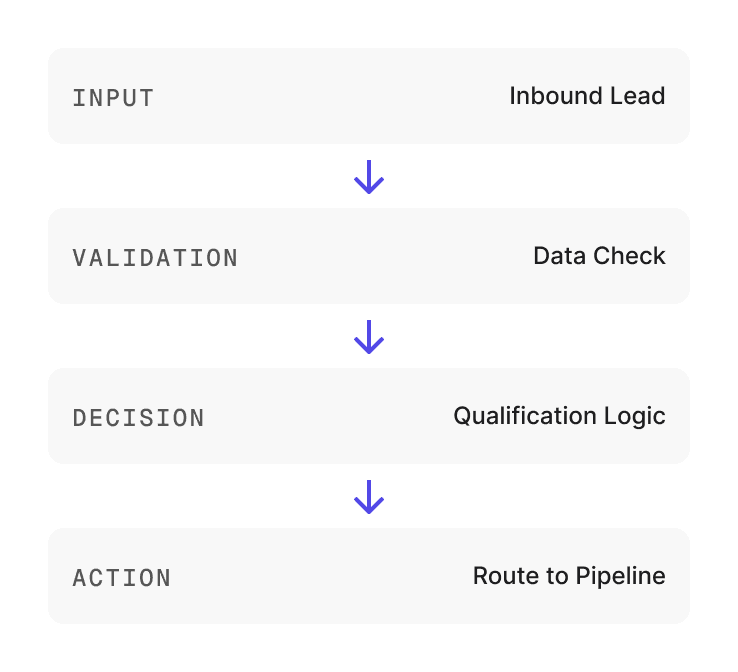
OPERATING IMPACT

OPERATING IMPACT

Faster cycles.
Fewer errors.

Faster cycles.
Fewer errors.

Shorter cycle times

Work moves through checks, approvals, and handoffs without waiting.

Shorter cycle times

Work moves through checks, approvals, and handoffs without waiting.

Higher first-pass quality

Agents inspect outputs against rules before humans review.

Higher first-pass quality

Agents inspect outputs against rules before humans review.

Lower review load

Teams focus on exceptions instead of routine validation work.

Lower review load

Teams focus on exceptions instead of routine validation work.

Cleaner operating data

Records update across CRM, tickets, docs, and databases as work moves.

Cleaner operating data

Records update across CRM, tickets, docs, and databases as work moves.

Consistent decisions

Rules apply the same way across teams, shifts, and volume.

Consistent decisions

Rules apply the same way across teams, shifts, and volume.

More Capacity Per Team

Operators handle higher volume without adding coordination layers.

More Capacity Per Team

Operators handle higher volume without adding coordination layers.

BUILD PROCESS

BUILD PROCESS

01

Step 01

Map Operating Logic

We trace workflows, owners, rules, data sources, and failure points before build.
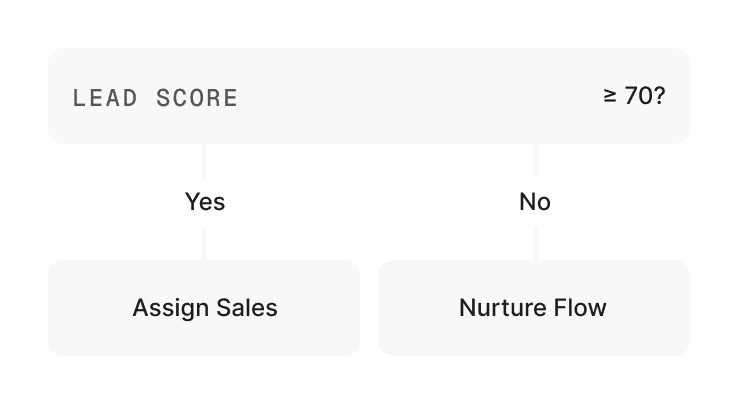
02

Step 02

Design Agent Controls

We define actions, permissions, review paths, and escalation rules for safe execution.
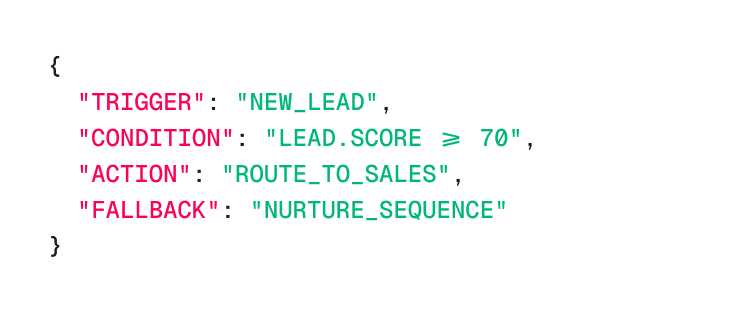
03

Step 03

Build Into Systems

We connect the agent to tools, test real cases, and validate outputs.
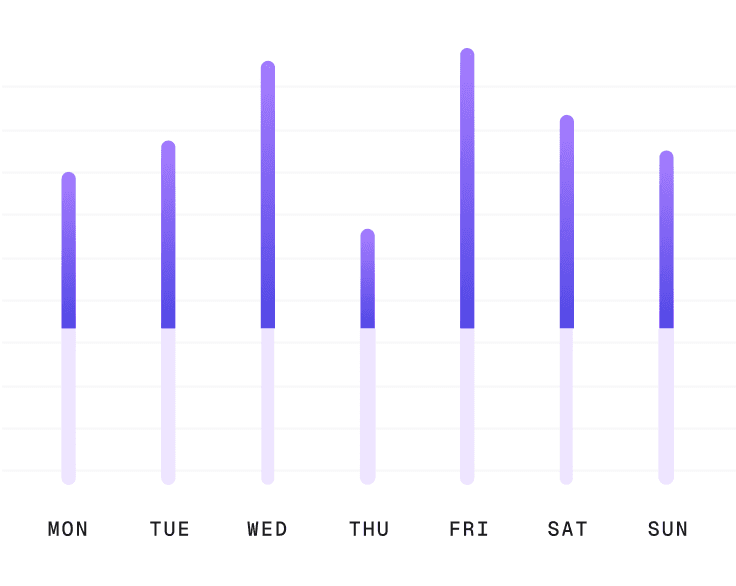
04

Step 04

Launch And Tighten

We monitor performance, fix misses, and expand only where results hold.

Use Cases

Use Cases

Agent systems in operation

Agent systems in operation

REVENUE OPERATIONS

Inbound Lead Routing

Qualify demand, enrich accounts, assign owners, and update CRM records.

REVENUE OPERATIONS

Inbound Lead Routing

Qualify demand, enrich accounts, assign owners, and update CRM records.

SUPPORT OPERATIONS

Ticket Triage & Resolution

An AI support agent handles common questions, resolves routine issues, and escalates edge cases to human agents when needed.

SUPPORT OPERATIONS

Ticket Triage & Resolution

An AI support agent handles common questions, resolves routine issues, and escalates edge cases to human agents when needed.

FINANCE OPERATIONS

Invoice Review & Approvals

Match invoices, flag gaps, route approvals, and prepare audit trails.

FINANCE OPERATIONS

Invoice Review & Approvals

Match invoices, flag gaps, route approvals, and prepare audit trails.

INTERNAL OPERATIONS

Knowledge Retrieval Of Fortune 500 Company

Answer process questions from approved docs, records, tickets, and systems.

INTERNAL OPERATIONS

Knowledge Retrieval Of Fortune 500 Company

Answer process questions from approved docs, records, tickets, and systems.

Engagement Model

Start focused.
Scale what works.

Pilot Deployment

Best for one high-value workflow with clear operational ownership.

Starts at $9000

What Gets Built

One production agent

Live workflow connection

Defined action rules

Exception escalation path

30-day performance tuning

Enterprise System

Best for multi-team workflows, sensitive data, and complex approvals.

Pricing by scope

What Gets Built

Multi-agent workflow system

Permissioned system access

Human review controls

Monitoring and audit trails

Ongoing optimization layer

NOT SURE WHERE TO START?

Bring one broken workflow

We’ll map the agent path, risk points, systems, and expected operating impact.

FAQ

FAQ

Frequently Asked Questions

Frequently Asked Questions

What exactly is an AI agent in this context?

An AI agent is an autonomous system designed to handle specific business tasks end-to-end. Unlike simple chatbots, AI agents can reason, take actions, integrate with tools, and follow defined workflows. In Agent OS, agents are built to operate reliably in real business environments, not as demos or experiments.

How is this different from a chatbot or no-code automation?
Can these agents integrate with our existing tools and systems?
How reliable and secure are AI agents in production?
Who is this template built for?